

A new report published on Wednesday by Bahçeşehir University Centre for Economic and Social Research (BETAM) warns that deep poverty remains a chronic and widespread crisis in Turkey, with an estimated 6.5 million people unable to afford five out of six essential living needs as of 2023. The findings challenge the assumption that recent economic growth has alleviated severe material deprivation, particularly in underdeveloped regions.
The report defines “deep poverty” using a targeted deprivation index, measuring individuals who cannot meet at least five out of six basic needs: affording unexpected expenses, paying utility and debt bills, eating meat or fish every other day, heating the home adequately, replacing worn clothing, and owning two decent pairs of shoes. These criteria offer a narrower, yet more consistent, alternative to relative poverty metrics often criticised for overlooking urgent material shortages.
According to BETAM’s analysis, Turkey’s deep poverty rate fell from 9% in 2015 to a low of 6.2% in 2018, correlating with rising per capita income during that period. However, the COVID-19 pandemic reversed progress, pushing the rate to 9.2% in 2021. Despite a partial rebound in household income, the rate remained troublingly high at 7.7% in 2023.
Perhaps most alarmingly, 3.3% of the population—or roughly 2.8 million people—met none of the six basic needs. This subgroup, termed “extreme deep poverty” in the report, saw only limited variation over time, suggesting structural barriers to escape poverty.
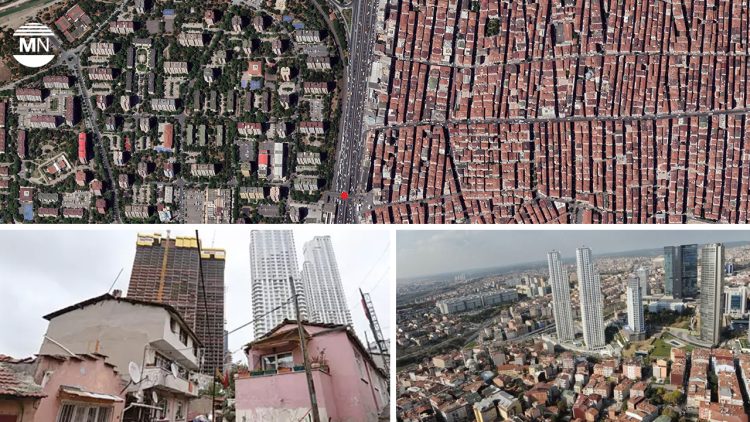
Regional disparities are stark. In Southeastern Anatolia, 20.7% of people were living in deep poverty, nearly three times the national average. Neighbouring Northeastern and Eastern Anatolia also reported double-digit rates. In contrast, Western regions such as the Marmara and Aegean had significantly lower rates—yet Istanbul, despite its high average income, showed above-average deep poverty at 5.4%, due to soaring living costs and inflation outpacing wage growth.
“The persistent levels of deep poverty in Istanbul show that high average income can mask underlying deprivation,” the report noted. While incomes may be higher nominally, residents are still unable to afford the basics due to diminished purchasing power.
The regional distribution of deep poverty highlights structural inequalities in income, employment, and education. In the most affected regions, a single breadwinner often supports five household members, compared to a 1:3 ratio in more prosperous areas. Across all regions, the majority of adults in deep-poverty households have less than a high school education—85.2% nationally.
These findings, researchers argue, underscore the need for regionally tailored poverty alleviation strategies. In less developed areas, expanding access to vocational training and cooperatives could be critical, while in urban centres like Istanbul, cost-of-living support and housing assistance may prove more effective.
The study also offers insight into the demographic composition of the deeply poor. Only 2.9% of those in deep poverty were retirees, a figure the authors attribute to Turkey’s pension system, which is still largely confined to formally employed workers with social security contributions. Informal sector workers and rural agricultural labourers—who often lack such coverage—are disproportionately represented among the deeply poor.
Policy recommendations in the report include improving access to stable employment, increasing investment in public services in neglected regions, and revising social aid mechanisms to target material deprivation more accurately. While the Turkish government has implemented multiple social assistance programmes, the report suggests that current poverty measures may underestimate the severity of unmet needs in critical areas.
As Turkey approaches local and general elections in the coming years, addressing the roots of deep poverty—rather than its symptoms—may be key to restoring public confidence and social cohesion.


