

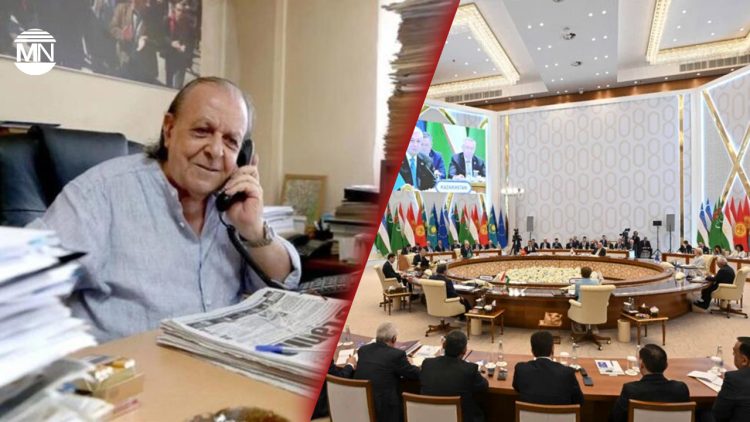
Turkey lacks the diplomatic clout to challenge the Republic of Cyprus’s expanding international partnerships in energy and diplomacy, a prominent Cypriot journalist has stated. Speaking to Mezopotamya Agency on 28 April, Şener Levent, editor-in-chief of the Avrupa Newspaper, described Turkey’s eastern Mediterranean policies as disconnected from regional realities.
The Republic of Cyprus, recognised globally as the legitimate government of the whole island, has bolstered ties with the United States, Israel and the European Union through energy agreements. On 2 January 2020, Cyprus, Greece and Israel signed the EastMed Pipeline Project deal to transport eastern Mediterranean natural gas to Europe, aiming to reduce the EU’s dependence on Russian gas. Levent noted that Cyprus, Israel and Egypt face no major hurdles in their energy exploration, backed by the US and United Kingdom, while Turkey’s maritime zone claims around Cyprus have faltered, with an Italian company now drilling in places from which Turkey has withdrawn its ships.
Recent diplomatic developments highlight Turkey’s diminished influence. On 4 April, Kazakhstan, Turkmenistan and Uzbekistan, members of the Organisation of Turkic States, opened embassies in the Republic of Cyprus and endorsed UN resolutions condemning the 1983 declaration of the Turkish Republic of Northern Cyprus (TRNC) as illegal. Turkey’s Foreign Minister Hakan Fidan called these moves “understandable” on 24 April. To try and ease tensions, Turkey is also preparing a 5-year plan in the TRNC, a self-declared state which only it recognises, in which it portrays itself as partner rather than occupier. However, while the specific details of the 5-year plan remain unclear, Levent suggested that these diplomatic steps, along with Turkey’s broader actions, are more in line with the EU’s efforts to counter Russian influence in former Soviet states than directly challenging Cyprus.
Levent argued that the 1974 division of Cyprus, with the Republic of Cyprus in the south and the TRNC in the Turkish-occupied north, benefits global powers. “For 51 years, everyone has been content with this situation,” he said, noting that the unresolved status serves US, EU and UK strategic interests, prioritised over Turkey’s regional concerns. The Republic of Cyprus’s military ties with Israel and Western nations, including joint exercises, further strengthen its position. Turkey’s planned May meeting in the TRNC aims to maintain influence among Turkish-speaking nations, but Levent dismissed Fidan’s claim of a united “Turkish world” supporting the TRNC, stating, “Turkey is not in a position to take decisive action.” He suggested Turkey is implicitly acknowledging the TRNC’s lack of global legitimacy, viewed by major powers as an “illegal state”, though it serves their interests.
The broader context involves efforts to curb Russia’s influence, with the EU and US backing Cyprus’s diplomatic gains to isolate Moscow, particularly since its assault on Ukraine. Levent noted that the recent moves target Russia more than Cyprus, with the island’s energy and strategic role keeping it central to regional tensions.


