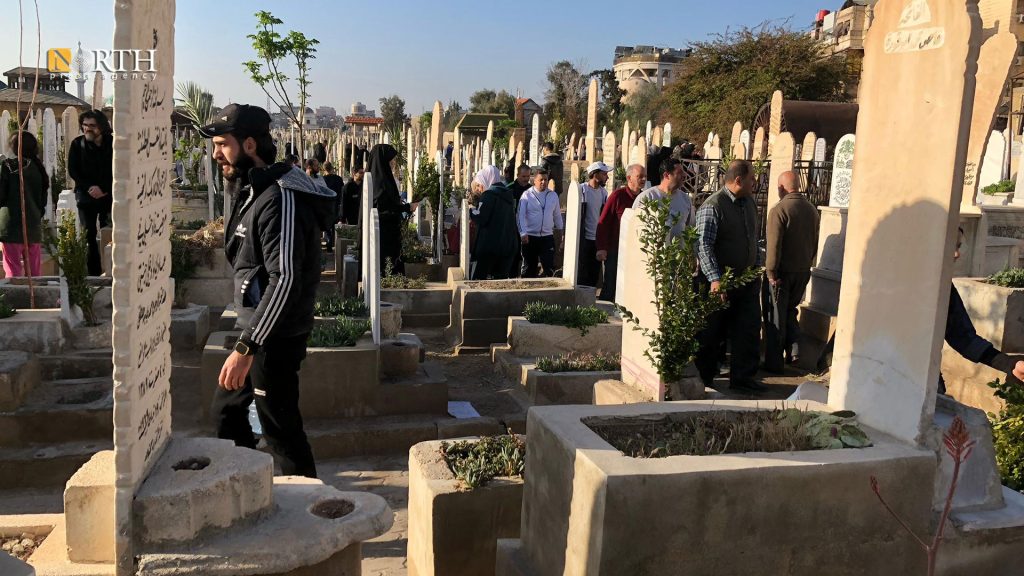
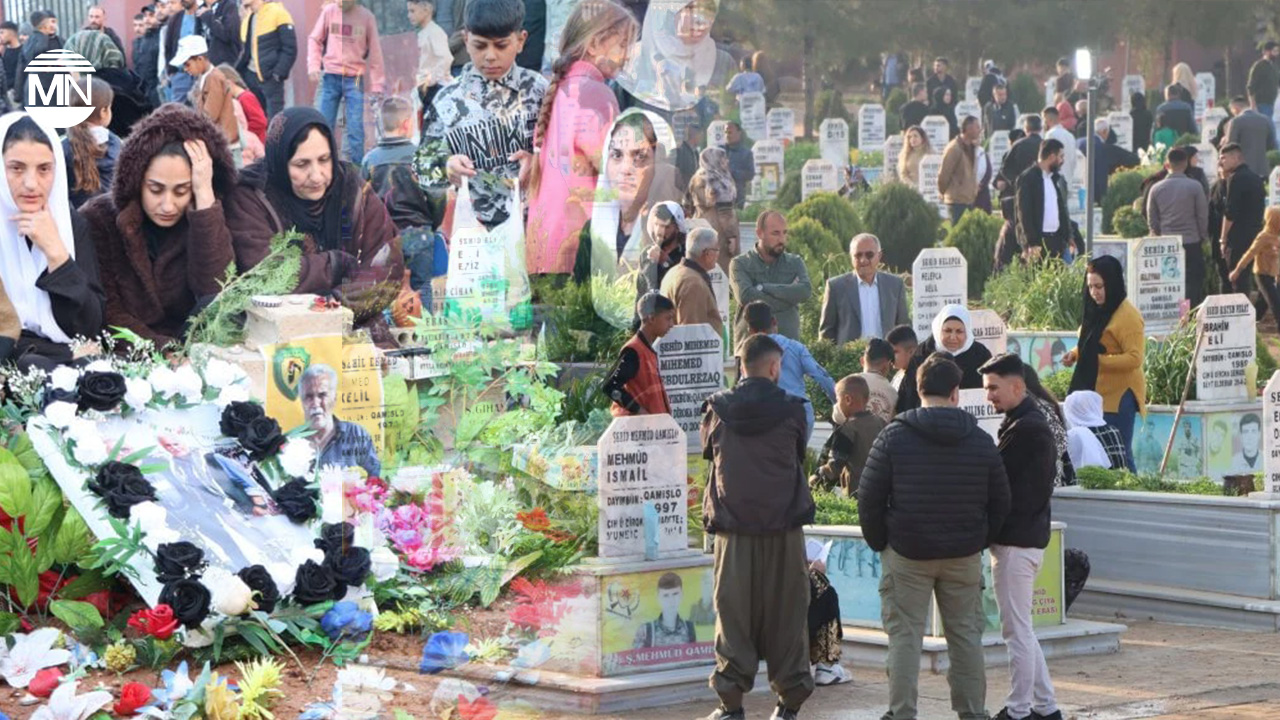
Muslim families across North and East Syria (Rojava) visited the graves of their loved ones on Sunday evening to mark Eid al-Fitr, or the Feast of Ramadan, honouring 13,000 civilians and freedom fighters killed in attacks by Turkish forces and extremist factions, including the Islamic State (ISIS), since the onset of the Rojava Revolution in 2012.
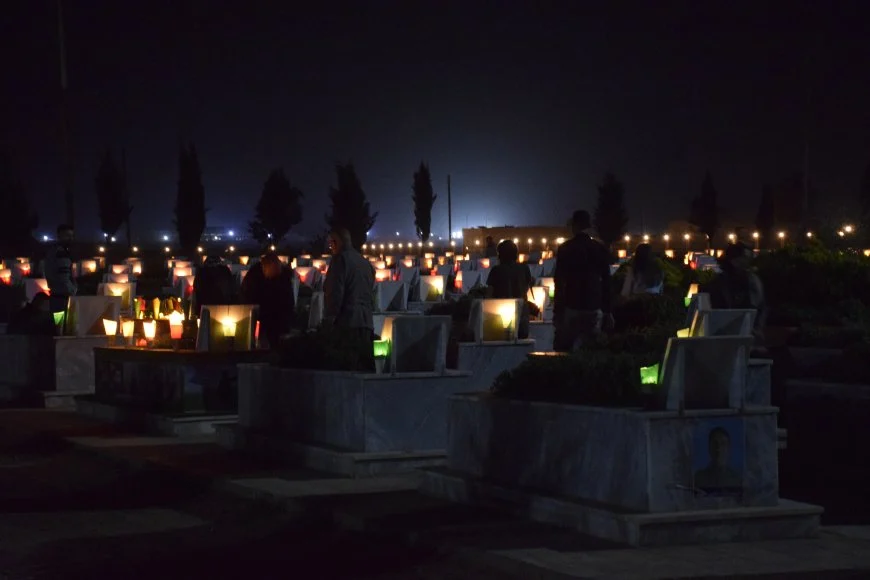
Ceremonies were held in 21 cemeteries across (Derik) Dêrik, Al-Qahtaniyah (Tirbespîyê), Qamishli (Qamişlo), al-Hasakah (Hesekê), Şedadê, Dirbêsiyê, Amude (Amûdê), Til Temir, Raqqa (Reqa), Deir Ez-Zor (Dêrazor), Kobani (Kobanê), and Tabqa (Tebqa), with the lighting of candles in green, red and yellow, representing the regional flag.
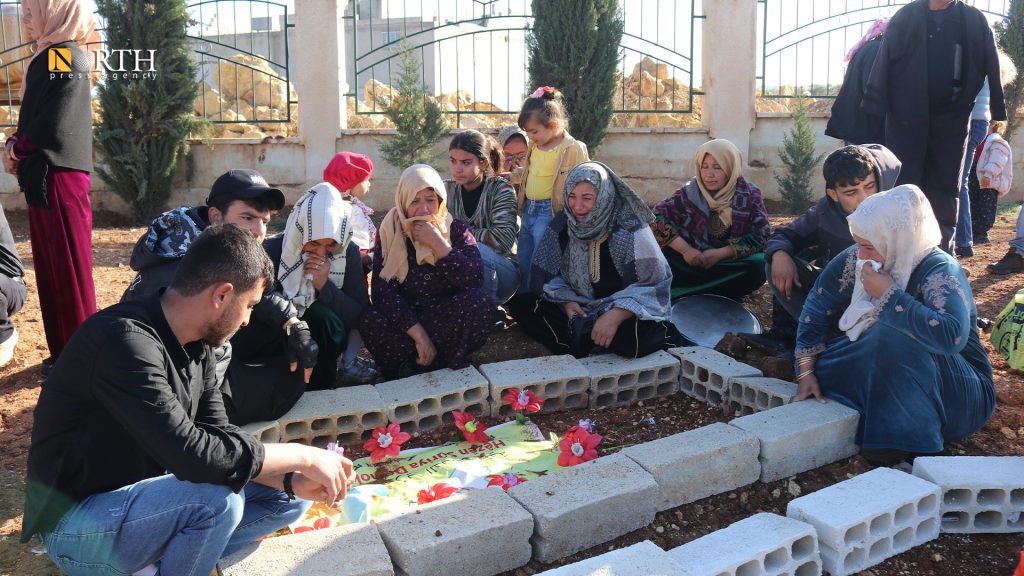
Families congregated again the following morning, sharing memories, readings and prayers at the graveside. In one speech, a speaker sent his greetings to imprisoned Kurdish leader Abdullah Öcalan. “This Eid will be the Eid of freedom and democracy,” the speaker said, echoing Öcalan’s peace call of 27 February.
The cemeteries were also visited by local security forces, who were offered delicacies by the families of the martyrs. A minute’s silence was observed in honour of the dead. While Turkish attacks on the region continue to push up the death toll, and civilians and local security forces are targeted and killed on a daily basis.
Citizens in Qamishli observing Eid also visited the grave of reknowned Kurdish actor Bavê Teyar and two Kurdish journalists, Nazim Daştan and Cîhan Bilgin, who were killed by Turkish drone strikes in northern Syria late last year.
The visiting of the martyrs’ graveyards in North and East Syria holds great meaning for the community. It serves as a way to honour and remember those who lost their lives in the war against ISIS, and in the ongoing defence against Turkish military attacks and assaults by its affiliated Syrian National Army (SNA). The visits are also a way of sharing grief and valuing the sacrifices made in defence of the revolution.
Young people from Kurdish regions in Syria, Iraq, Turkey and Iran, are buried alongside internationalists from countries around the world who joined the freedom fight in northern Syria over the past 13 years, demonstrating the international spirit of the Rojava Revolution and the great cost at which the revolution has been protected.
People in other main cities in Syria, such as Aleppo and Damascus, also paid visits to graveyards on the first day of Eid.