

Sadat Ulugana, a historian specialising in Kurdish and Armenian studies, has written a new essay on the history of the Kurdish flag, garnering fresh insights. The flag is known to Kurds as “ala rengîn” (colorful flag) or “kesk û sor û zer” (green, red and yellow), and according to Ulugana dates back 105 years. While the flag has become an integral symbol of Kurdish culture over the course of a century, its origins remain disputed.
Ulugana quashes the claim that the origin of the flag lies with the Nazi Major Gottfried Johannes Müller, who allegedly designed it as part of his campaign to incite Kurds to rebel against the British in 1943. In fact, Kurds fought with the British against the Nazis in that year. Moreover, Ulugana points out that as early as 1920, the Kurdish Social Organisation (Ligue Kurde) in Istanbul had already drawn up a design of what we now recognise as the Kurdish flag. Ulugana cites Kadri Cemil Pasha, a prominent Kurdish nationalist and thinker:
“The Social Organisation [in 1920] determined the colour and shape of the Kurdish flag, which consists of three colours, red on top, white in the middle, a sun on top and green on the bottom, and declared it to be the national flag,” Pasha wrote, in his 1969 book, Doza Kurdistan.
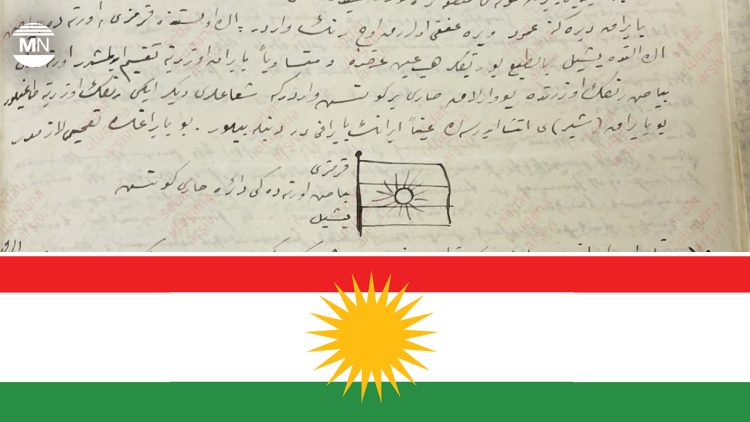
During his archival research, Ulugana uncovered a letter dated 21 January 1928, written by Memduh Selim Bey, a prominent Ottoman intellectual known for his contributions to Kurdish nationalism, and addressed to İhsan Nuri Pasha, a key military figure during the Ararat Rebellion. The letter included a drawing of the flag as described above.
“Bey states that the Kurdish flag was first arranged in Istanbul in 1920, demands an end to the discussions on the Kurdish flag, and demands that this flag be accepted unconditionally by the resistance committee on Mount Ararat,” Ulugana stressed.

The Kurdish flag was very similar to the Iranian flag of the time, a country which Ulugana points out would have had a significant political and aesthetic influence on Kurds at that time. However, differences lie in that the sun replaces the Iranian flag’s lion, and the red and green of the Kurdish flag are inverted.

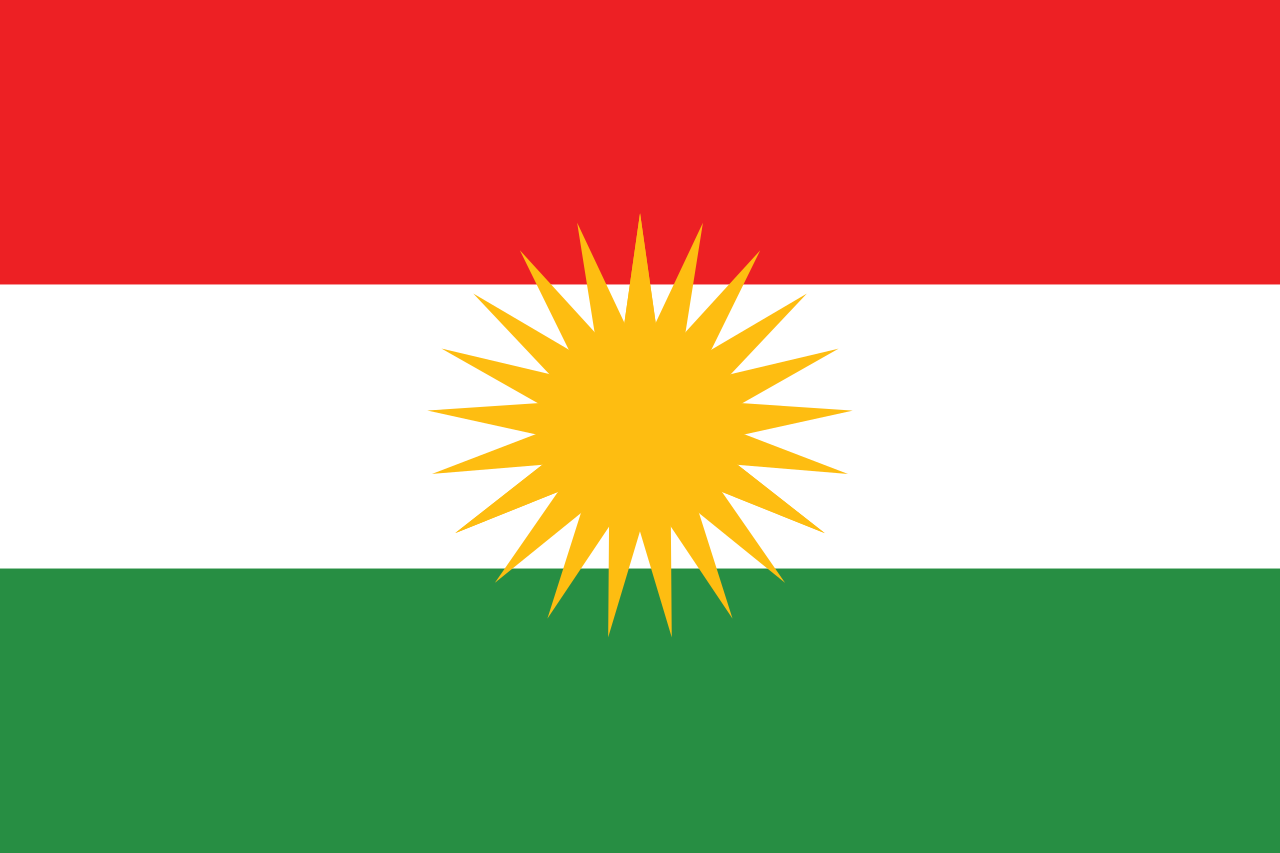
Over time, Kurds have attributed varying meanings to the colours their flag. Red represented the blood of the martyrs and the colour of revolution, green represented the fertility of the Kurdish lands, and white stood for peace. The sun symbolised an ancient Zoroastrian representation of well-being.
Ulugana’s research shows that a number of such flags were ordered by the Ararat rebellion administration in 1928, upon receiving the description and drawing previously described, and were subsequently flown that summer. One hundred years later, the flag remains a vibrant symbol of Kurdish identity and resistance.


