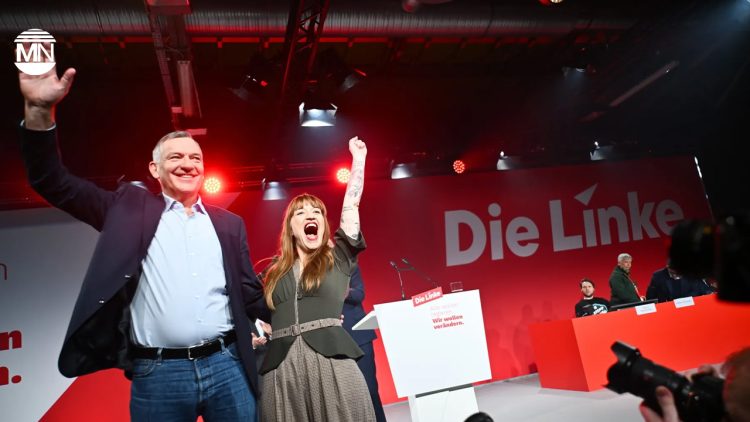
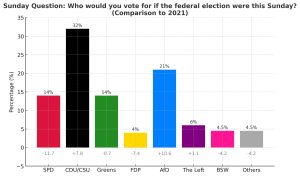
Die Linke, the German left-wing party widely believed to be on the wane, has staged a surprising comeback ahead of the federal election on 23 February. Opinion polls now put the party on 7%, more than double its position two months ago, increasing its chances of returning to the Bundestag. This resurgence comes against a backdrop of rising support for right-wing parties, particularly the far-right Alternative for Germany (AfD).
In December, Die Linke was polling at just 3%, well below the 5% threshold needed to enter parliament. Since then, the party has seen a sharp rise in support, thanks to a combination of strategic repositioning, a generational change in leadership and an emphasis on digital outreach.
One of the key figures behind this turnaround is Heidi Reichinnek, the party’s lead candidate. With over 500,000 followers on TikTok, she has successfully engaged young voters, a demographic that had largely dismissed Die Linke in recent years. Her videos, which mix political messaging with satire and direct criticism of the AfD, have gone viral and reached millions.
Using social media for political purposes
According to reports from Deutsche Welle and Tagesschau, Die Linke has used social media, particularly TikTok, to reach young voters who consume politics primarily through digital platforms. The AfD had previously dominated TikTok among German parties, but Die Linke has provided a strong counterbalance, using humour and sharp political commentary to challenge right-wing narratives.
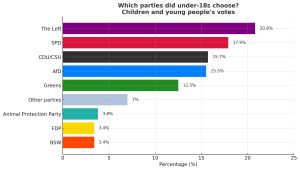
“I didn’t want to leave TikTok to the AfD,” Reichinnek told Tagesschau. Her efforts seem to be paying off. In the recent U18 Youth Election, an unofficial poll of underage voters, Die Linke secured almost 21% of the vote, indicating a strong connection with younger generations.
In addition to its digital strategy, Die Linke focused its campaign on issues affecting young and low-income citizens. Its proposals include rent caps, a higher wealth tax and a higher minimum wage.
The party has also seen a significant increase in membership, with over 20,000 new members joining since January, bringing the total to around 81,000. The average age of these new members is 28, signalling a generational shift within the party.
Die Linke is gaining strength, while the AfD continues to enjoy strong support. In a podcast interview with Table Today, Vice Chancellor Robert Habeck suggested that the recent decisions of Friedrich Merz, leader of the conservative Christian Democratic Union of Germany (CDU), had indirectly contributed to the resurgence of Die Linke.
"The history books may one day write: Friedrich Merz, the saviour of Die Linke."
Robert Habeck said, referring to Merz's controversial cooperation with the AfD on certain parliamentary votes.
As election day approaches, it remains to be seen whether Die Linke’s momentum will translate into actual votes. But what seemed impossible just a few months ago – its return to parliament – now looks increasingly likely.