

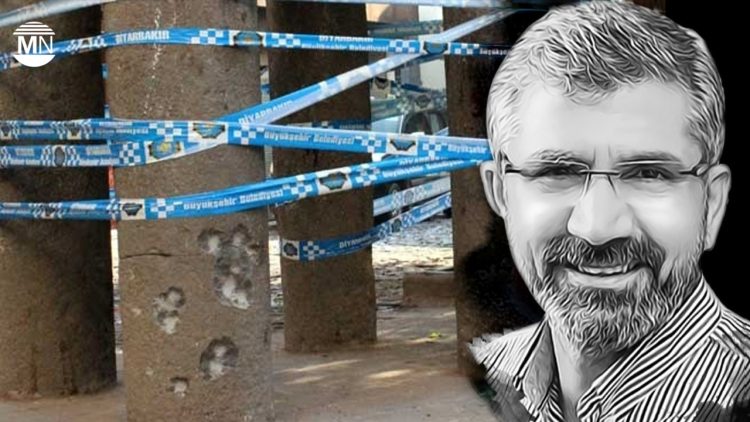
Reactions have poured in following the decision of the Diyarbakır Court of Appeal to uphold the acquittal of three police officers in the high-profile murder case of Tahir Elçi. The ruling, which backs the earlier decision of Diyarbakır High Criminal Court No 10, has been widely condemned by politicians and human rights lawyers.
Prominent Kurdish lawyer and human rights activist Tahir Elçi was fatally shot on 28 November 2015 during a press conference in front of Diyarbakır’s historic Four-Legged Minaret, having just called for an end to violence and the protection of cultural heritage. The trial, which began four years after his murder, has been plagued by allegations of irregularities, including delays in investigation of the crime scene and a palpable reluctance to question police officers as suspects.
Related Article:
Acquittal of police officers in Tahir Elçi case ‘huge blow to justice’: Amnesty International
A spokeswoman for the Peoples’ Democratic Congress (HDK) Meral Danış Beştaş criticised the verdict, describing it as part of a “gradual mechanism of impunity”. She vowed to continue the fight for justice, saying, “This case is not over. Those responsible will be held accountable.” Similarly, Democratic Regions Party (DBP) co-chair Saliha Aydeniz rejected the verdict, calling it a “mockery of justice” and vowing to challenge the systemic impunity in Elçi’s case.
Republican People’s Party (CHP) MP for Diyarbakır Sezgin Tanrıkulu said “to those who say, ‘There is no Kurdish issue’,” that Elçi’s murder “in broad daylight in the middle of Diyarbakır” was a clear illustration of the existence of the Kurdish issue, as well as being a symbol of Turkey’s long-standing crisis of justice. “The streets of Diyarbakır witnessed this political murder. Those who seek justice often become victims themselves,” he said.
The verdict also drew sharp criticism from legal experts and activists. Mahsun Batı, president of the Tahir Elçi Foundation*, condemned the decision, citing fundamental flaws in the judicial process. “We will take this case to the Constitutional Court,” Batı declared, stressing the need for accountability both of the perpetrators themselves and those who shield them.
A former chair of the Diyarbakır Bar Association Ahmet Özmen denounced the verdict as the final act of a “theatrical trial”. “The hands behind Elçi’s murder remain in the shadows, but our struggle will not stop until the truth is revealed,” Özmen said.
Elçi’s murder took place during a volatile period in southeast Turkey, marked by the collapse of a peace process between the Turkish state and Kurdish political actors, following which the state conducted widespread military operations and imposed curfews in Kurdish towns, where violence claimed many lives. On the day of his death, Elçi had called for an end to such hostilities, only to be shot dead shortly afterwards. Observers have noted that the investigation into his killing lacked independence and transparency, with key evidence overlooked and suspects shielded from scrutiny. Critics argue that the judicial response to Elçi’s murder reflects wider patterns of impunity and political interference in Turkey’s judiciary, and underlines the systemic challenges to justice in the country.
Related Article:
Fear of impunity grows as prosecutor requests acquittal for police officers in Tahir Elçi case
This latest verdict highlights the ongoing struggle for justice in cases of political violence in Turkey. Tahir Elçi, who dedicated his career to defending human rights and exposing impunity, remains a symbol of resistance to these systemic problems.
*Established in 2019 in Diyarbakır by Elçi’s wife Türkan Elçi and others, the Tahir Elçi Foundation aims to honour the legacy of the assassinated Bar Association President by promoting justice, advocating for human rights and fostering a culture of tolerance and unity across society.


