

President Recep Tayyip Erdoğan’s announcement of a 30 percent increase to Turkey’s minimum wage for 2025 has drawn widespread criticism from opposition parties, trade unions, and citizens, who argue the rise falls far short of addressing soaring inflation and mounting living costs.
The new monthly minimum wage, set at 22,104 Turkish lira (around $630), was announced on 24 December. Erdoğan touted the measure as a step to support workers. However, critics say the increase is inadequate, particularly as inflation has severely eroded purchasing power.
The main opposition Republican People’s Party (CHP) denounced the hike as insufficient. CHP officials announced plans to convene an extraordinary meeting of their executive board to outline actions against the government’s decision. “This increase does not meet the needs of millions of workers who are struggling to make ends meet,” a party statement read.
The pro-Kurdish Peoples’ Equality and Democracy (DEM) Party also slammed the wage adjustment. DEM Party co-chairs Tuncer Bakırhan and Tülay Hatimoğulları labelled the increase “a wage of poverty and hunger”.
Trade unions joined the chorus of disapproval. The Confederation of Turkish Trade Unions (Türk-İş) described the raise as unacceptable, even if it were applied for a six-month term instead of a full year.
Meanwhile, economists warned that the wage hike could fuel further inflation in the coming months. Recent analyses suggest a 25% wage increase could push annual inflation up by 1.5 to 5 percentage points, raising concerns over the broader economic impact.
Turkey’s annual inflation rate stood at 47.09% in November 2024, down from a peak of 75% in May. Although the government credits strict monetary and fiscal policies for the decline, the pace of recovery has lagged behind expectations.
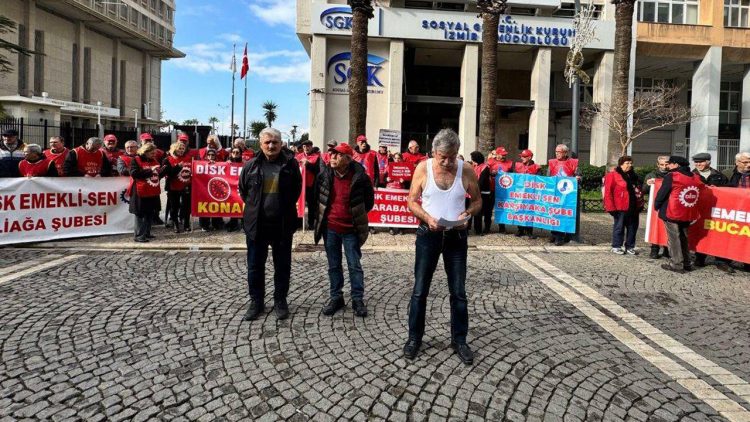
The announcement has triggered protests across the country, with demonstrators decrying the government’s failure to address the cost-of-living crisis. Critics view the wage hike as one of the Erdoğan administration’s most significant missteps in recent years, underscoring growing public discontent.
As tensions escalate, opposition parties and trade unions are preparing to intensify their actions, demanding a minimum wage that better reflects Turkey’s economic realities and offers relief to struggling households.


