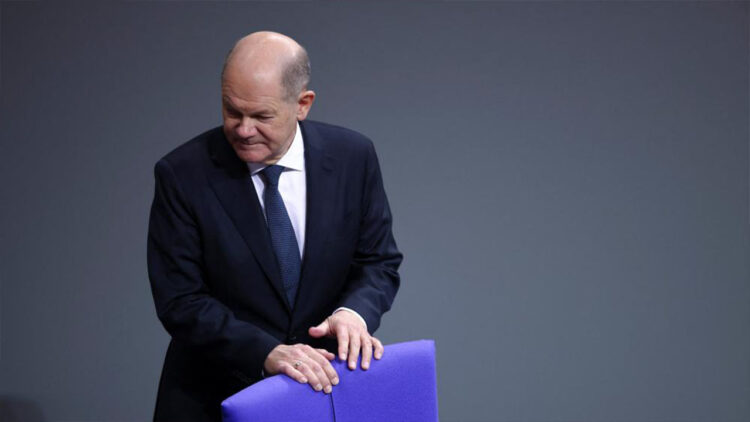
German Chancellor Olaf Scholz was ousted on Monday after losing a confidence vote in the Parliamentary of Germany Bundestag, setting the stage for snap elections in February. The collapse of his coalition government has thrown Europe’s largest economy into political turmoil, with centre-right and far-right parties poised to make significant gains.
The confidence vote saw 394 out of 733 MPs in Germany’s parliament rejecting Scholz’s leadership. The Social Democratic Party (SPD) leader, who headed the now-defunct “traffic light coalition” with the Greens and the Free Democrats (FDP), could only muster votes from his party, three independents, and an unlikely trio from the far-right Alternative for Germany (AfD). The Greens abstained, further underscoring the fractured state of the coalition.
The government’s unravelling began in November when FDP Finance Minister Christian Lindner was dismissed, leading to the coalition’s collapse. Scholz’s attempts to govern with a minority government alongside the Greens failed to gain traction, prompting him to call the unprecedented confidence vote. It marked the first such vote in Germany since Gerhard Schröder’s SPD government in 2005, which led to Angela Merkel’s ascent to power.
Scholz is expected to request the dissolution of parliament from President Frank-Walter Steinmeier on Tuesday. Steinmeier’s approval would trigger elections anticipated in February, with major implications for Germany’s political landscape. Recent polls indicate a surge in support for the centre-right Christian Democratic Union (CDU), led by Friedrich Merz, and the far-right AfD, reflecting growing dissatisfaction with the current government’s handling of key issues such as inflation and energy policy.
The looming election is likely to prolong Germany’s political uncertainty. Analysts predict weeks, if not months, of coalition negotiations before a new government is formed. Friedrich Merz is widely tipped to become the next chancellor, but forming a stable coalition could prove challenging given the polarised electorate.
The situation underscores Germany’s political fragility at a time when its leadership is critical for navigating Europe’s economic and geopolitical challenges.