

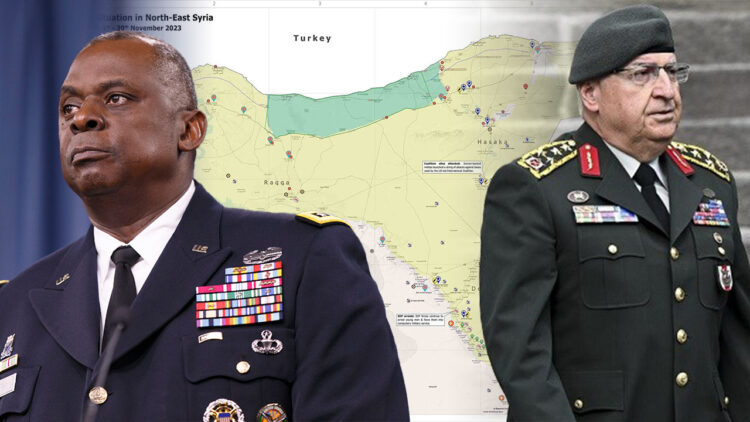
The United States has voiced serious concerns over Turkey’s military activities in Syria, particularly in SDF-controlled areas like Manbij (Minbîc). Defence Secretary Lloyd Austin and Senator Lindsey Graham have issued statements indirectly warning Ankara against escalating tensions that threaten both regional stability and the ongoing fight against ISIS.
Defence Secretary Lloyd Austin discussed recent developments with Turkish Defence Minister Yaşar Güler, emphasising the importance of protecting civilians and adhering to international humanitarian norms. He noted that US-Turkey cooperation remains vital to preventing instability in Syria from undermining the defeat-ISIS mission. However, Austin’s measured tone implies a growing unease about Turkey’s actions, particularly in areas liberated from ISIS by the SDF.
“Our countries will continue working together to defeat terrorism and ensure the security of our forces,” Austin stated.
Senator Lindsey Graham was more explicit, describing the situation in northern Syria as “rapidly deteriorating” in favour of radical Islamist militias. He warned that Turkey’s military actions could jeopardise years of progress made by the US and SDF in defeating ISIS and securing tens of thousands of detainees in northeast Syria.
Graham urged both outgoing Biden and incoming Trump administrations to act proactively, warning: “There is nothing worse for the region – and the United States than to have tens of thousands of radical ISIS fighters back on the battlefield.”
He also highlighted the dire situation in the Al Hol refugee camp, calling it a “nightmare in the making” as it becomes a recruitment ground for extremist forces.
The recent warnings come after an earlier Pentagon statement, which drew criticism for implying that the US-SDF alliance was solely focused on defeating ISIS. This narrow framing disappointed observers who expected broader US support for the SDF’s efforts to stabilise northeast Syria against Turkish-backed forces and mercenaries.
Manbij has borne the brunt of Turkey’s actions, enduring relentless assaults from Turkish-backed Syrian National Army (SNA) forces and affiliated mercenaries for over a week. These attacks threaten the fragile security established by the SDF and risk plunging the region back into chaos.
The US’s latest messages to Turkey suggest a shift towards a more assertive stance, reflecting growing frustration with Ankara’s policies. While the US aims to preserve its strategic partnership with Turkey, these developments underscore the challenges in balancing counterterrorism priorities with diplomatic ties in a volatile region.


