

Turkey’s replacement of elected mayors in Kurdish-majority municipalities with government-appointed trustees has triggered mass protests across the country, uniting diverse opposition forces in a rare show of solidarity.
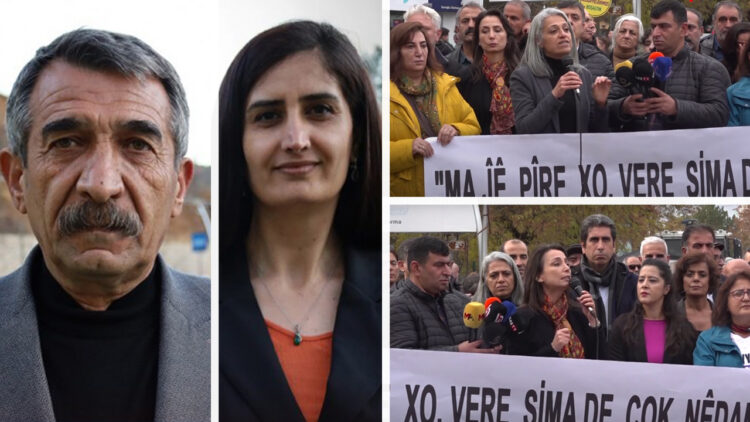
Addressing a crowd in Dersim on Saturday, Democratic Regions Party (DBP) Co-Chair Çiğdem Kılıçgün Uçar condemned the trusteeship policy, tying it to historical state repression of Kurdish and Alevi communities. “If a state appoints trustees to override the people’s will, that state has failed,” she declared, invoking the memory of Seyid Riza, a symbol of Kurdish-Alevi resistance during the 1938 Dersim massacres.
The protests have garnered support from across the political spectrum. Republican People’s Party (CHP) MP Sezgin Tanrıkulu called the trustee appointments a “theft of sovereignty”, while fellow CHP MP Mahmut Tanal criticised their unconstitutionality, asserting, “You cannot override people’s will with an administrative decision.”
Demonstrations extended to Urfa’s Siverek district, where protesters carried banners proclaiming, “Trustee policy is usurpation”, and to Hakkari (Colemêrg), where marches led by dismissed co-mayor Viyan Tekçe echoed the slogan, “Resistance is life”. In Adana, protests were marked by heavy police presence, with Human Rights Association Chair Yakup Ataş warning that the trusteeship policy signalled Turkey’s shift toward authoritarianism.
Tülay Hatimoğulları, co-chair of the Peoples’ Equality and Democracy (DEM) Party, accused the government of using trusteeships as a civilian form of coup. “Those who couldn’t defeat us at the ballot box now think they can suppress us through legal manipulation,” she said, calling for greater unity among opposition forces.
Civil society groups, including trade unions and local organisations, have joined the demonstrations, framing the trusteeship appointments as a broader assault on democratic norms. Ovacık Mayor Mustafa Sarıgül, defending his administration, emphasised the political motivations behind the policy: “If I’ve been a ‘terrorist organisation member’ for 12 years, why did the governor sit with me?”
The protests continue to highlight the growing discontent with Ankara’s governance in Kurdish regions, linking current policies to decades of unresolved tensions between the state and minority communities.


