

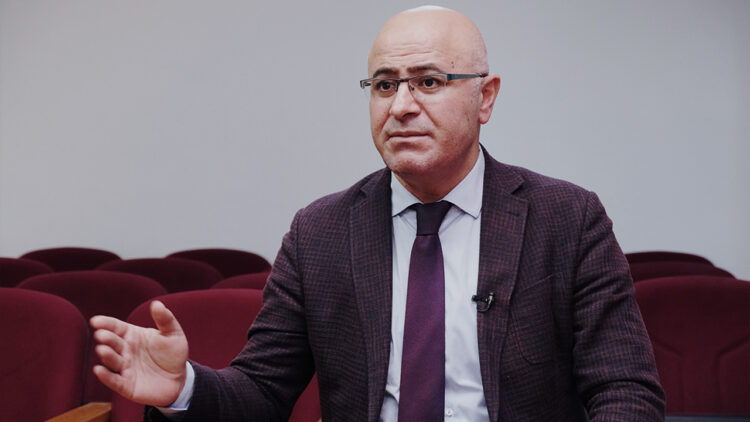
The Democratic Confederalism model, proposed by Abdullah Öcalan, is a potential path for peaceful coexistence in the conflict-ridden Middle East, Hişyar Özsoy, a former MP for Turkey’s Peoples’ Democratic Party (HDP), suggested in a recent interview with Özgür Politika’s Barış Balseçer.
Emphasising the need for societies to explore non-violent, democratic forms of coexistence, Özsoy warned that nationalist and divisive ideologies threaten to deepen regional hostilities. “We need models for living together,” Özsoy said, describing Democratic Confederalism as a framework that promotes reduced hierarchies, democratic governance and an end to inter-communal violence.
While he acknowledged the model’s utopian aspects, he underscored its potential to foster mutual respect in deeply polarised societies. “It’s not about loving each other,” he added, “but about creating societies where people coexist without violence, dominance or imposed agendas.”
Özsoy observed that Kurdish communities, through their experiences and struggles, have opened this debate, despite resistance from nationalist and militaristic rhetoric that often drowns out such voices. He expressed hope that the region’s current challenges will encourage a stronger push toward peaceful coexistence.
Israel-Palestine conflict may heighten hostility toward Kurds
Özsoy also warned that the Israel-Palestine conflict could escalate hostilities toward Kurds, especially as nationalist fervour rises across the Middle East. He noted that Kurdish organisations must remain vigilant, considering both the risks and the opportunities for autonomy within the turmoil.
EU and Council of Europe fall short in pushing for Turkish democracy
Turning to the role of international organisations, Özsoy critiqued the European Union and the Council of Europe for their leniency towards Turkey’s democratic backsliding, citing economic and security interests. “The EU and NATO prioritise Turkey’s strategic alignment over pressing it to restore democracy and human rights,” he said, pointing out the EU’s deep economic integration with Turkey, even as political relationships remain strained.
Özsoy argued that meaningful change in Turkey would likely stem from internal dynamics rather than external pressure, adding, “Western nations may voice concern, but without local momentum for change, their involvement remains limited.”


