

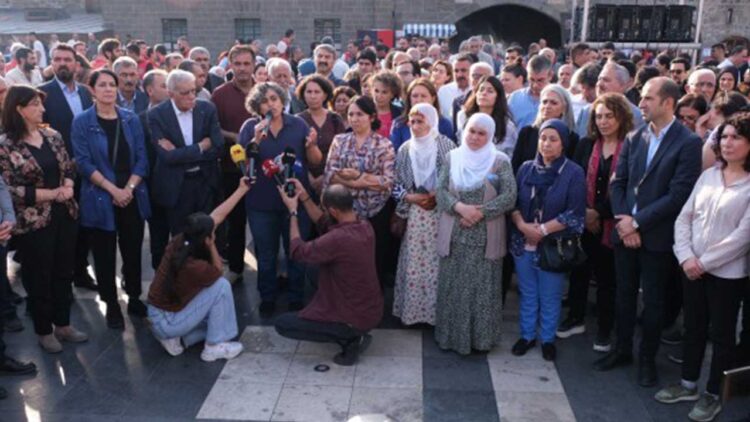
As a major rally approaches, set for 13 October in Diyarbakır (Amed), prominent Kurdish politicians Ayla Akat Ata and Sebahat Tuncel are calling for the end of the isolation imposed on Abdullah Öcalan at İmralı Prison in Turkey, arguing that peace in Turkey can only be achieved through dialogue with the imprisoned leader of the Kurdistan Workers’ Party (PKK). Their remarks highlight the continued centrality of Öcalan to the Kurdish peace process and the broader political discussions surrounding the Kurdish issue in Turkey.
Speaking to supporters during a march and gathering in Diyarbakır, Ayla Akat Ata, a member of the Initiative Against Isolation, stressed that any path to peace runs through Öcalan’s prison. “For years, people have pointed to İmralı as the place where peace must be negotiated. This is not new; even the current government once recognised this. Yet, they continue to be intolerant of any calls for dialogue,” she said. Ata stressed that the Kurdish people’s demand for peace must not be criminalised and added, “At the rally, we will declare that the solution is in İmralı and that the isolation imposed on Öcalan must end”.
Ata’s comments reflect growing frustration with what many Kurdish leaders see as the Turkish government’s unwillingness to engage in genuine peace talks. The upcoming rally is expected to bring together diverse elements of Kurdish society, with the message that as long as there is no engagement with Öcalan, the conflict will continue. Ata further criticised the state’s intolerance towards peaceful advocacy, noting that such intolerance has frequently come to nothing in the courtroom.
Sebahat Tuncel, another key figure in Kurdish politics, echoed Ata’s sentiments and went further, arguing that the isolation imposed on Öcalan is symbolic of a broader suppression of freedoms in Turkey. “The isolation imposed on Mr Öcalan is not just about him; it extends to the whole of Turkey,” Tuncel said. She stressed that the ongoing Kurdish conflict, which has led to the deaths of children, women and civilians, cannot be separated from the country’s overall war policies. “We want to pull the country out of this darkness,” she added, urging supporters to rally for peace.
Tuncel also stressed that any peaceful resolution must involve Öcalan, pointing out that his role during the 2013-2015 peace process demonstrated his ability to influence the broader Kurdish movement. She warned that without addressing the core issues, including Öcalan’s isolation and the lack of Kurdish rights, peace will remain elusive.


