

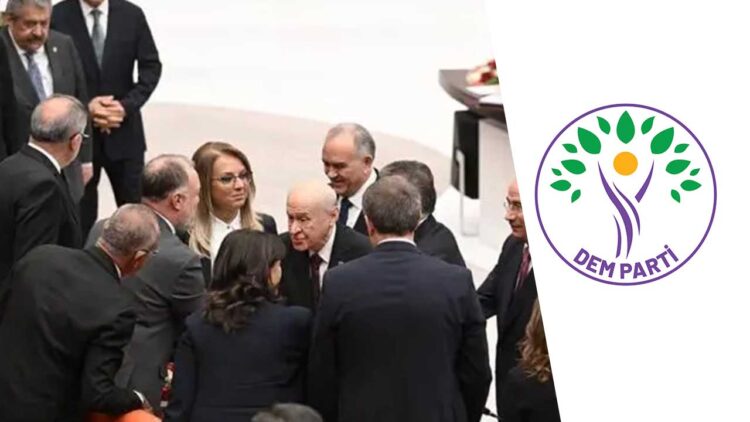
Following recent symbolic gestures by Turkey’s government, including a handshake between far-right Nationalist Movement Party (MHP) leader Devlet Bahçeli and pro-Kurdish Peoples’ Equality and Democracy (DEM) Party co-chair Tuncer Bakırhan, the DEM Party has expressed cautious optimism but insists that concrete steps are needed to address the Kurdish issue. This comes amid rising discussions about a possible new peace process.
On 1 October, Bahçeli’s unexpected handshake with Bakırhan during the opening session of the Turkish parliament was seen by many as a potential shift in the government’s approach to the Kurdish question. Bahçeli’s subsequent statement — “We need to establish peace in our own country” — and President Recep Tayyip Erdoğan’s backing statement, which emphasised the importance of national dialogue, have set the stage for further discussions on how to address the conflict.
However, DEM Party officials have expressed a cautious stance, pointing out that symbolic gestures alone are not enough to bring about real change. They argue that any serious peace process must involve renewed dialogue with Abdullah Öcalan, the imprisoned Kurdistan Workers’ Party (PKK) leader, whom they see as essential to resolution of the conflict. “Societal peace requires more than gestures — it needs substantive actions,” said one party source. The officials also emphasised that the peace process of 2013-2015 showed the key nature of Öcalan’s role in de-escalating violence and fostering dialogue.
In addition to Öcalan’s involvement, the DEM Party has urged the Turkish government to engage with the Kurdish-led Autonomous Administration (AANES) in North and East Syria (Rojava). The party stressed that Rojava poses no threat to Turkey, advocating for diplomatic cooperation as a way to foster regional stability and build trust. “Recognising Rojava’s autonomy and opening a channel of dialogue would be a step toward ensuring mutual security,” one official added.


