

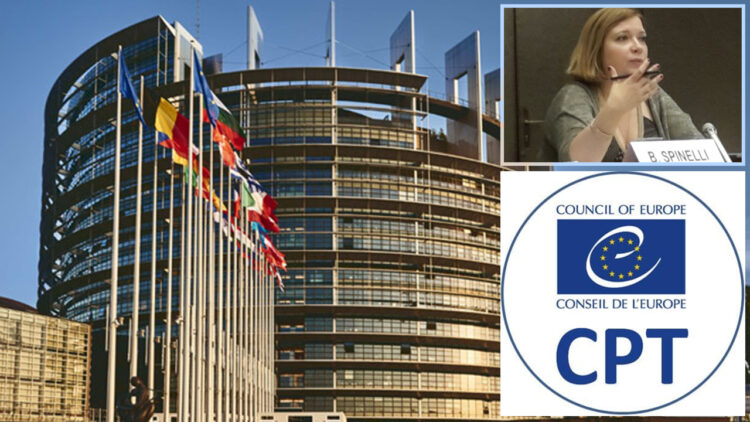
Barbara Spinelli, lawyer and co-president of the European Association of Lawyers for Democracy (ELDH), is one of at least 1,500 lawyers from 35 countries to recently petition the Turkish Justice Ministry for access to Kurdistan Workers Party (PKK) Leader Abdullah Öcalan, imprisoned on Turkey’s İmralı Island since 1999 and denied any contact with the outside world since March 2021, calling for an end to the policy of isolation. Speaking out, Spinelli criticised the Council of Europe’s Committee of Ministers for its decisions relating to the prison and the delays in its proceedings, as reported by Melek Avcı of JinNews.
Freedom is the only interpretation of the Right to Hope
“They [Committee of Ministers] are trying to change the meaning of the right to hope, to minimise it, but it is not possible to change the meaning of the right to hope, because legally it can only have one meaning, and that is ending the sentence of life imprisonment,” Spinelli said.
The Committee of Ministers announced a resolution on the issue of Öcalan’s ‘Right to Hope’ at its meeting of 17-19 September. They stated that there is cause for concern, and noted that Turkey has not taken any steps regarding conditions of release. Nevertheless, they imposed no sanctions on Turkey.
What is new is a request from Turkey for data on prisoners sentenced to life and for a report in line with all decisions taken. They also decided that there will be interim evaluations if there is no progress, with a review in September 2025. But the lawyers who applied to visit Öcalan consider this one-year delay a “diversion”.
“It is time for a stronger political stance to ensure that the Turkish authorities take the situation in İmralı seriously because what is going on in İmralı is an example of serious human rights violations against political prisoners in Turkey. The Council of Europe’s Committee for Prevention of Torture (CPT) has visited İmralı several times but decided not to publish the report on the situation of the prisoners there under pressure from Turkey. Turkey is also not complying with the decisions of the European Court of Human Rights. It is no longer a matter of executing a single decision,” the lawyer said.
Spinelli’s response to the statement in the Committee of Ministers’ decision on the right to hope that “… the discovery of such a violation cannot be understood as giving the applicants hope of imminent release…” was as follows:
“This is their first comment on the right to hope. In my opinion, the decisions were made in order to make it possible for the Council of Europe to have some degree of dialogue with the Turkish authorities. But actually, the European Court of Human Rights states that when it talks about the ‘right to hope’, it means to not be in prison for a long time. So when we talk about the right to hope, this is the only meaning of this right, and all human rights organisations in the world are working and fighting for this. Legally speaking, there is no other possible interpretation of the right to hope. Of course, the Committee of Ministers is conducting a kind of political dialogue with the Turkish authorities. They are trying to change the meaning of the ‘right to hope’, to weaken it, but it is not possible to change the meaning of the right to hope, because legally it has only one meaning: it means an end to life imprisonment.”
‘We will pressurise the CPT’
Criticising the setting of September 2025 as the date for a decision as well as the CPT’s repeated publication of its reports only years after its visits, the lawyer said: “I don’t think the state’s approval is really needed in such a serious situation. Despite requests from the [Turkish] government to postpone the publication of the report, we need to press for implementation of Article 10 of the convention [European Convention on Human Rights], which protects the public’s right to know. This regulation has not been implemented for a long time, and the situation is very urgent. Now is the time, because the CPT is the only body authorised to visit İmralı and get information about human rights violations there, where even lawyers and family members cannot visit. So it is very important that the information and reports they have about the condition of the prisoners are immediately made public. It is time to force the CPT to stop delaying the publication of reports just because of Turkey’s veto.”
Nato diplomacy complicates decisions
“The situation is complicated not only because Turkey is a NATO member but also because of the current geopolitical situation and ongoing conflicts in the world. Turkey’s strategic position during world conflicts makes it difficult for European officials to take a strong position on human rights violations in Turkey. This is a very critical and sensitive point; it is also closely related to the ongoing war in Palestine. There are also fears that Turkey may somehow leave the mechanisms of the Council of Europe, which would have negative consequences for the Turkish people,” Spinelli said.
“Our campaign against all of this is clear. First and foremost as lawyers from all over the world, we supported and signed the call for Mr Öcalan’s freedom and for immediate respect for the human rights of all prisoners, in particular Mr Öcalan’s right to meet with his lawyers. We demand that the Government of Turkey respect the rulings of the European Court of Human Rights. We also demand that sanctions are not imposed that affect the rights of political prisoners, and that their right to receive visits is respected. Political prisoners’ visitation rights are being denied, and [international court] decisions are not being implemented, in complete violation of human rights law and international law, which Turkey has ratified. That is why we vehemently protest against all these violations and intend to bring strong pressure to bear. We have a very important meeting in a few days, to be announced in a press release.”


