

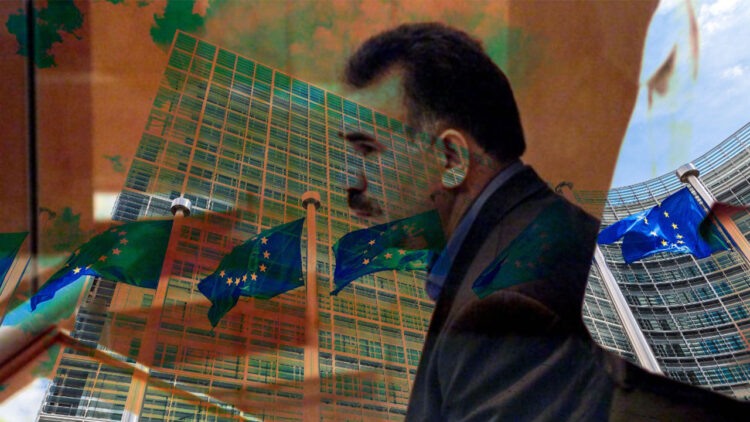
İbrahim Bilmez, a lawyer for the Kurdish leader Abdullah Öcalan, has warned that Turkey could face severe consequences if it fails to comply with a European Court of Human Rights (ECtHR) ruling on Öcalan’s imprisonment.
The ECtHR found on 18 March 2014 that Öcalan’s aggravated life sentence without the possibility of parole violates the European Convention on Human Rights (ECHR), and it called on Turkey to make the necessary legal amendments. However, Turkey has taken no steps to comply with the ruling in the ten years since. The Council of Europe’s Committee of Ministers is scheduled to meet from 17 to 19 September to review Turkey’s compliance with the ECtHR’s decisions.
Speaking to Mezopotamya Agency’s İbrahim Irmak on Sunday, Bilmez, from the Asrın Law Office which represents Öcalan, described the Committee of Ministers’ decision to place the ECtHR’s ruling on Öcalan back on its agenda as “a positive but overdue step.” He stated, “The decision in question has been stubbornly and persistently ignored by Turkey for years, and it is the Committee of Ministers of the Council of Europe that is responsible for its implementation.”
He added, “All member states of the Council of Europe, including Turkey, have signed the Convention, recognising the authority of its organs and committing to abide by its decisions. Turkey, having accepted the ECtHR’s jurisdiction, must fulfil its obligations regarding the court’s rulings.”
The lawyer pointed out that according to the ECtHR’s 2014 judgment, “a life sentence without the possibility of parole amounts to torture”. He argued that Öcalan and others serving such sentences have been subjected to ongoing torture since 2014, but the Committee of Ministers has failed to enforce compliance.
Bilmez criticised Turkey for not making any legislative changes over the past decade, despite numerous appeals from lawyers and civil society organisations. “We have applied to the Committee of Ministers six times since 2014 under the ‘right to hope’ principle,” he stated, adding that civil society groups had also lodged applications as recently as July.
Turkey’s continued non-compliance could lead to exclusion from the Council of Europe and other international bodies, Bilmez warned. “Turkey risks being excluded from the European system, just like Russia after its invasion of Ukraine,” he said, adding that “the economic and reputational costs could be high, and Turkey could find itself classified as a third-world country.”
Bilmez argued that the aggravated life sentence first applied to Öcalan has since been imposed on thousands of prisoners in Turkey, but the exact number is unknown. “The Committee of Ministers has asked Turkey for this information, but Turkey has refused to provide it,” he noted. He also criticised Turkey for not facing sanctions for its non-compliance, saying, “These policies are emboldening Turkey to disregard the ECtHR’s rulings.”
He urged Turkey to enact legislative reforms without further delay, stating, “A first step could be a new law allowing review of life sentences after 25 years by an independent panel, unlike the current boards that include prison officials who may lack impartiality.”
Bilmez emphasised that Turkey’s failure to act affects not only Öcalan but thousands of other prisoners, stating, “If Turkey complies with the ECtHR ruling, it could reduce political tensions and restore its credibility as a state that respects the rule of law.”
He warned that Turkey’s current course could lead to economic and political isolation, similar to the case of Russia, and concluded, “This issue concerns all of Turkish society, not just Öcalan or the Kurds.”
Bilmez added that lawyers and rights groups will continue to pursue all available avenues, including meetings with international bodies, to advocate for compliance with the ECtHR ruling and address broader human rights issues in Turkey.


