

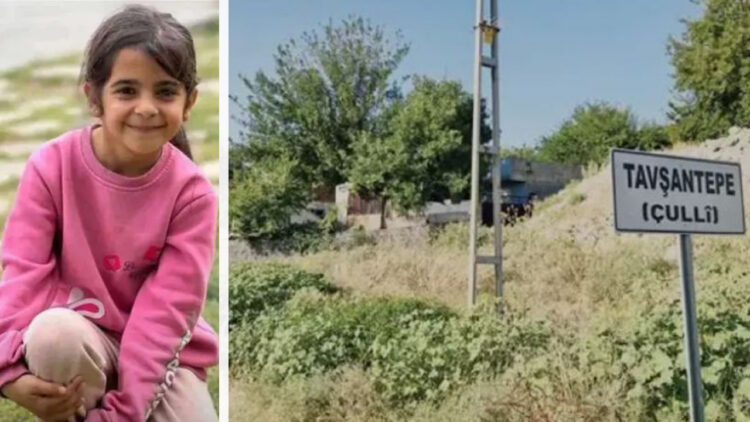
The investigation into the murder of eight-year-old Narin Güran in the Bağlar (Rezan) district of Diyarbakır (Amed) has exposed possible links to organised crime and political cover-ups, according to journalist Dorşîn Yıldız of JINNEWS.
“We should not be asking ‘What did Narin see?’ but rather, ‘Why and how was Narin murdered by a crime syndicate?'” Yıldız argues, pointing to deeper, unanswered questions about power dynamics in Tavşantepe (Çuli) village, where Narin’s body was found on 8 September.
Yıldız highlights how “all digital media accounts, news agencies, and especially state-affiliated channels” have shifted the narrative of the investigation to focus on allegations of a ‘forbidden love’ affair, while ignoring evidence of “380 bullets and weapons” found in the village. “Why is the state particularly protecting and absolving Salim Güran?” Yıldız asks, noting the state’s attempt to frame other suspects and even target a 15-year-old on digital media.
The investigation has become more controversial due to statements by Galip Ensarioğlu, a ruling Justice and Development Party (AKP) MP for Diyarbakır, who has been called to testify. Kurdish groups argue that Ensarioğlu’s recent remarks, where he stated, “There are things we know but do not say,” suggest a political cover-up due to his connections with the Güran family, local religious sects and Turkish state authorities. Despite his denial of any wrongdoing, Kurdish groups claim that his comments reveal a deliberate effort to compromise the investigation.
Witnesses in Tavşantepe and nearby villages, Yıldız writes, suggest that Salim Güran has “dirty connections” that are not being discussed due to his political ties. “We know very well that Galip Ensarioğlu’s statement calling them ‘our friends’ should not be taken lightly,” she adds, questioning why the law has not been enforced against such political affiliations.
Meanwhile, protests have erupted across Turkey, with demonstrators demanding transparency and accountability from both the government and religious authorities. “Those who form dirty alliances are the embodiment of the mentality that killed Narin. The government and its dirty alliances are responsible for in these Narin’s murder,” said pro-Kurdish Democratic Regions Party (DBP) Co-chair Çiğdem Kılıçgün Uçar.
Yıldız also examines the organised efforts to manipulate public opinion, pointing out the “luxury vehicles, thousands of acres of land and frequent visits from AKP members” linked to the Güran family. “It is clear that an expert was guiding the family from the start,” she writes, noting that one family member is a former lawyer. “Is the state also part of this organisation?” she asks, quoting a witness who said, “Salim has strong backing; no one can stand against him.”
The investigation, Yıldız argues, appears to be driven by a “concerted effort to hide the truth”, as pro-government media conduct a narrative that ignores key facts, such as the “550 weapons allegedly found in the village”. As scrutiny intensifies, the question remains: what is the state trying to conceal?
The DBP and other Kurdish groups continue to demand a full investigation into Ensarioğlu’s comments, while calling for greater transparency over the handling of Narin Güran’s case, which they argue has been compromised by political ties and efforts to protect certain individuals linked to powerful factions.


