

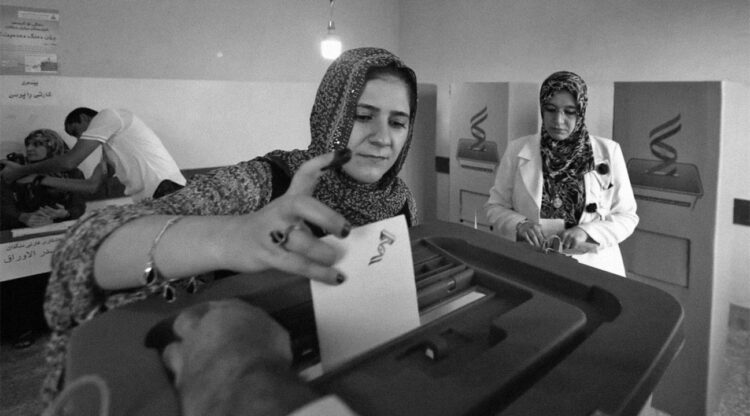
Kurdish political analyst Adil Osman has warned that the Kurdistan Democratic Party (KDP) could face significant losses in the upcoming Kurdistan Region elections on 20 October due to widespread public anger over its cooperation with Turkey. This anger, Osman argues, has created a volatile political climate in the region, where voters are increasingly viewing the elections as an opportunity to express their dissatisfaction with the KDP’s perceived complicity in Turkey’s military activities in northern Iraq.
“The people are furious with the KDP for its alliance with Turkey, and this anger could manifest at the ballot box,” Osman stated, speaking to Mezopotamya Agency’s Mahmut Altıntaş on Sunday. He highlighted that the KDP’s support for Turkey’s actions has become a significant point of contention among Kurdish voters. The Kurdistan Region of Iraq (KRI) is set to hold parliamentary elections in October, with the main contenders including the KDP, the Patriotic Union of Kurdistan (PUK) and other smaller parties.
Osman explained that the KDP’s apparent reluctance to prepare thoroughly for the elections reflects its fear of a significant electoral backlash. He pointed out that Turkey’s ongoing military operations in the KRI, allegedly supported by the KDP, have further fuelled public resentment, with many voters eager to use the elections to challenge the party’s dominance.
“The people may not have organised resistance against the KDP’s actions, but they see the upcoming elections as an opportunity to take revenge,” Osman explained. He added that the PUK, led by Bafel Talabani, has gained considerable support due to its opposition to Turkey’s actions, making it a strong contender in the elections.
Osman also noted that the election results could have far-reaching implications for the KRI and the wider Middle East. “If the elections are conducted freely and fairly, a PUK victory over the KDP could lead to major shifts in the region,” he remarked. “A win for the PUK would not only be a victory for the Kurdish people but could also hinder Turkey’s ability to operate unchecked in the region.”
The October elections, taking place under the shadow of Turkish military actions and regional instability, are expected to play a crucial role in shaping the future political landscape of the KRI and its relationship with neighbouring powers.


