

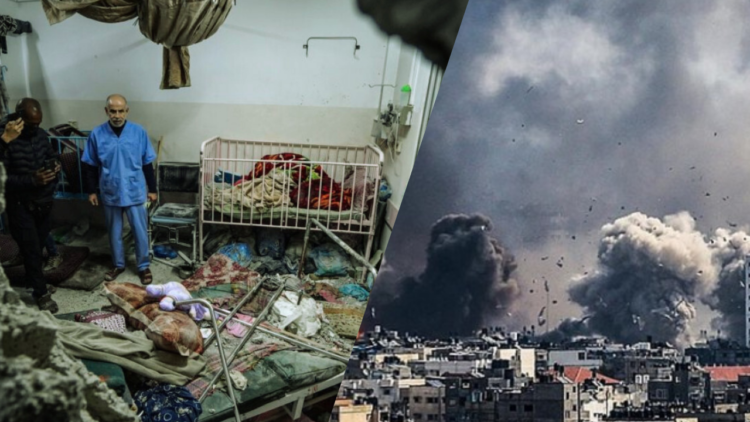
Israeli special forces raided Gaza’s Nasser Hospital, the largest functioning medical facility in the region, on Thursday. The raid, which followed a days-long siege, resulted in power cuts and the deaths of five patients due to limited oxygen supplies, according to Gaza’s Ministry of Health.
Amid international concern and criticism, the Israeli Defence Forces (IDF) defended the operation, claiming it was intelligence-led and aimed at arresting suspected Hamas members and recovering the bodies of deceased hostages allegedly being held in the hospital. Hamas, however, rejected these claims and distanced itself from the activities inside the medical facility. In the meantime, hospital staff have been forced to pass through military checkpoints, with reports of detentions.
Further controversy arose on Friday when Israeli forces carried out more arrests inside the hospital compound, alleging that the detainees were involved in Hamas-led attacks against Israel.
Meanwhile, the World Health Organization (WHO) continues to actively seek to access the besieged hospital. In order to continue providing essential services to trapped civilians and patients, the WHO stresses the urgent need for medical supplies and fuel.
In addition, allegations of forced relocation of patients and the use of heavy machinery to unearth mass graves within the hospital compound have drawn sharp criticism.
As the situation unfolds, the humanitarian impact of the conflict, particularly on medical facilities and staff, remains a major concern. Israel has longstanding accusations that Hamas uses hospitals and other civilian structures to shield militants. Critics say there is little evidence to back up the claim.
At least 28,775 people have been killed and 68,552 wounded in Israel’s war on the Gaza Strip, the health ministry in Gaza said on Friday.
In the past 24 hours, 112 Palestinians were killed and 157 wounded, it added.


