

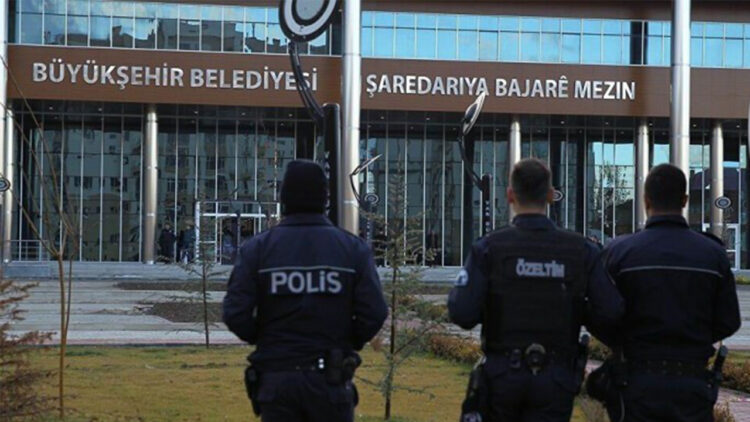
The state-appointed trustee of the metropolitan municipality of Van (Wan), a Kurdish-majority province in eastern Turkey has initiated the sale of the last remaining municipal properties in its Edremit (Artemêt) and Tuşba districts, as reported by Ruken Polat of Mezopotamya Agency (MA) on Sunday. This move comes as the municipality faces a staggering debt of 3.68 billion Turkish lira (TL), more than 120 million USD.
According to the MA report, the trustee’s decision to liquidate the remaining assets is seen as a last-ditch effort to address the financial crisis ahead of the coming local elections. Previously, over 150 plots of land and buildings, encompassing an area of 213,457 square metres in Edremit’s Eskicami and Yenicami neighbourhoods, were auctioned with an estimated value of 800 million TL (26 million USD). The latest sales include 58 plots of land and properties, with public notices for the auctions posted throughout the city on 7 February.
Furthermore, in Tuşba district, a 5,600 square metre portion of a 20,000 square metre area, which includes a wedding hall and part of the intercity bus station, was put on the market with an estimated price tag of 36 million TL (1,186,591 USD). Another 3,000 square metre plot in the İstasyon neighbourhood is also up for sale, alongside 11 shops in the Vanpark Shopping Mall, which has previously failed to attract buyers at several auctions.
The trustee administration has been under scrutiny for its handling of the municipality’s finances. Despite the sale of numerous lands and municipal buildings, the debts have continued to mount. The last appointed council meeting saw decisions to secure loans from the state-owned İlbank, which funds municipalities in Turkey, and from private banks to cover outstanding electricity debts, further exacerbating the financial strain.
Bedia Özgökçe Ertan was elected Co-mayor of Van Metropolitan Municipality with 54% of the vote on 31 March 2019, but was one of dozens of co-mayors removed from office by the Interior Ministry on 19 August of the same year and replaced by state-appointed trustees.
Addressing the 42nd session of the United Nations Human Rights Council via video conference, Ertan highlighted Turkey’s violations of the Universal Declaration of Human Rights, in particular the undermining of the electoral rights of the Kurdish people.
The practice of appointing trustees, known as kayyums, to take over municipalities, particularly in Kurdish-majority areas, has raised concerns about the erosion of local democracy and political rights. Critics argue that the removal of elected officials and the appointment of government-aligned administrators undermines the principle of self-governance and disproportionately targeted Kurdish communities, affecting their representation and participation in local governance.


