

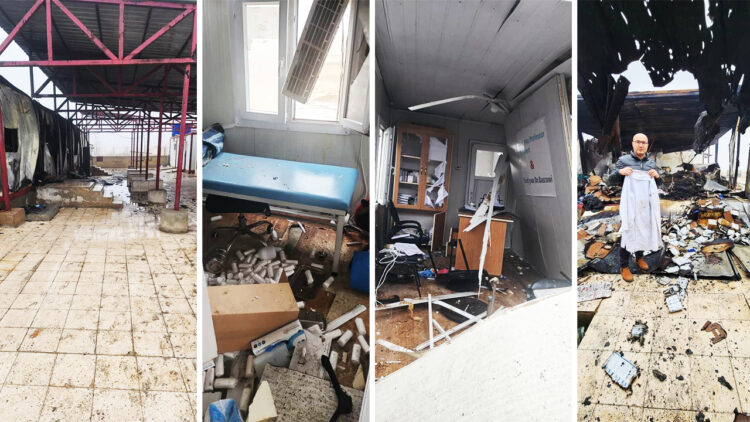
The Kobani Medical Centre, a cornerstone of medical services in North and East Syria, was levelled in recent Turkish air strikes, striking a devastating blow to healthcare in the region. This significant loss was reported by Dersim Dağdeviren, a prominent Kurdish physician and co-chair of the Kurdish Academic Network, highlighting the critical importance of the facility in providing essential medical services to the community.
Dağdeviren, who is also a board member of the European Turkey Civic Commission and a deputy chairperson of Marburger Bund in Germany, stressed the centre’s critical role in the region’s healthcare system. Located in Kurdish-led North and East Syria, the Kobani Medical Centre was integral to the community, offering a wide variety of medical services including emergency outpatient care, a specialised diabetic clinic and paediatric vaccinations. The destruction of this facility disrupts vital healthcare access, particularly for the approximately 3,100 diabetic patients and hundreds of daily emergency care seekers. Notably, these services were offered free of charge, highlighting the centre’s role in catering to the underprivileged.
This strike not only impacts immediate medical care but also poses long-term challenges, especially for chronic disease management and child health. The Poverty and Health Association, a German organisation, played a significant role in managing the diabetic outpatient clinic, underlining the centre’s international connections and support.
Dağdeviren has responded with calls for action, directed at figures and organisations such as German Foreign Minister Annalena Baerbock, the German Federal Foreign Office, Chancellor Svenja Schulze, the World Health Organization and several humanitarian and medical bodies.
The destruction of the medical centre in these air strikes, conducted by a NATO member, raises serious concerns and questions regarding the conduct of military operations and their impact on civilian infrastructure and essential services. The international community’s response and the measures taken to address this situation remain to be seen.


