


Robin Fleming
As the tension in the Middle East continues to grow, seemingly exponentially, all eyes are on Gaza and Israel. This includes the eyes of the United States, but in an ever complicated geopolitical arena, you can never look at anything as occurring in total isolation. On 9 December the US Senate successfully voted to reject a motion to withdraw troops from North and East Syria (NES). This significant decision cannot be disentangled from the conflict in Israel and Gaza and the broader Middle East.
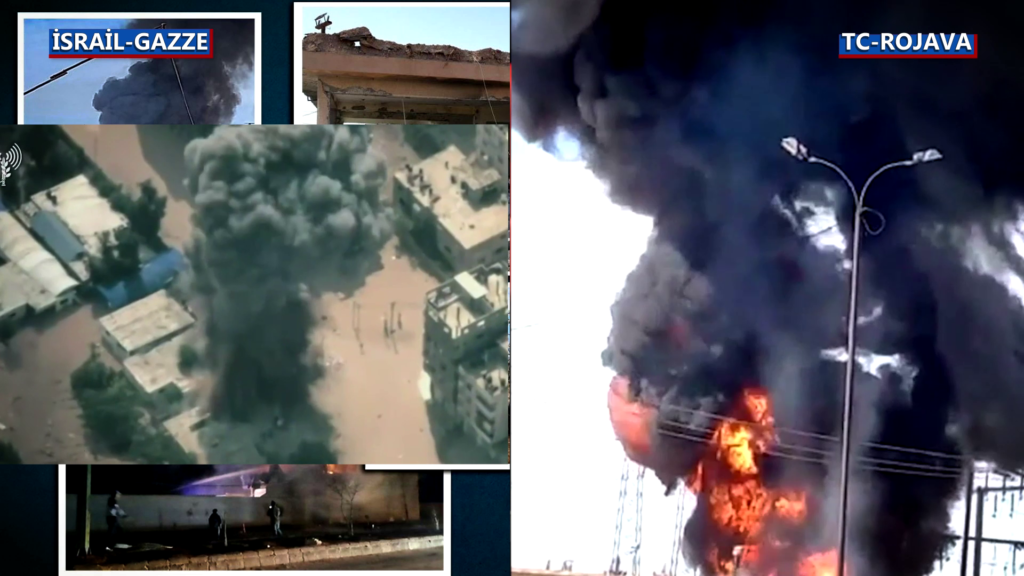
To understand the intricacies of the US Senate’s decision, it is essential to revisit the roots of the Syrian conflict. The civil war, which erupted as peaceful anti-government protests in 2011, has resulted in a complex web of geopolitical interests and alliances. Various factions, including the Syrian government led by President Bashar al-Assad, rebel groups, and extremist organisations like the Islamic State (ISIS), have vied for control, leading to a humanitarian crisis of unprecedented proportions.
The United States has been a key player in the Syrian conflict, initially supporting rebel forces seeking to overthrow the Assad regime. Over time, the focus shifted to combating the rise of ISIS, leading to the deployment of US troops in the region, the formation of the Global Coalition to Defeat ISIS, and the tentative allegiance between the United States and Autonomous Administration of North and East Syria (AANES). The Syrian Democratic Forces (SDF) affiliated with the AANES led the way to the territorial defeat of ISIS, with support from the US-led Global Coalition.
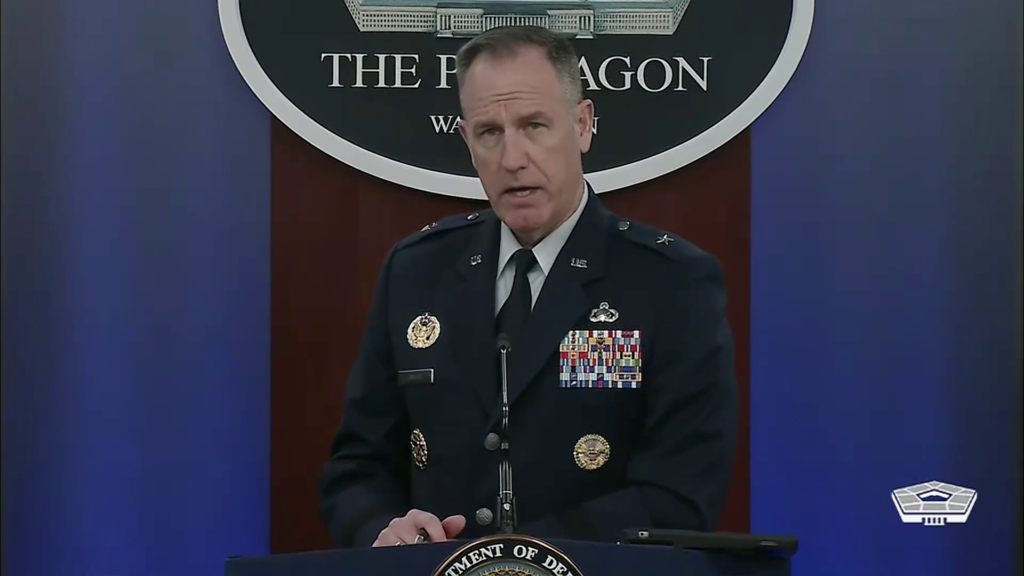
ISIS sleeper-cells remain active in NES, often conducting monthly attacks, with 11 confirmed attacks in November 2023. The US often claims their desire to remain in NES is motivated only by a commitment to the prevention of an ISIS resurgence, with Pentagon Spokesperson Brigadier General Patrick Ryder going so far as to directly say, “Our single and only focus in Syria is on the defeat ISIS mission.”
While it is true that ISIS is a very real threat that the SDF and AANES Internal Security (Asayish) personnel face on a daily basis, it is clear that General Ryder’s statement was not the complete truth and there are manifold reasons for the US Senate to reject withdrawal from NES. The primary one being – Iran.
Iran has significant political and military influence throughout the region, including in NES and Syria as a whole. Iran continues to expand its influence, and the presence of American forces breaks up what could be a consistent path of influence, and more importantly path for weapons trade from Iran to Lebanon, where Hezbollah organise against US ally Israel.
The relationship between the United States and Iran has been marked by decades of complexity, shaped by geopolitical considerations, nuclear ambitions, and regional dynamics. Since the recent conflict between Israel and Gaza, tensions between the US and Iran have taken on new dimensions.
The US-Iran relationship reached a critical juncture with the signing of the Joint Comprehensive Plan of Action (JCPOA) in 2015, a multilateral agreement aimed at curbing Iran’s nuclear program in exchange for sanctions relief. However, in 2018, the US unilaterally withdrew from the JCPOA, re-imposing crippling sanctions on Iran. This move heightened tensions and marked a significant shift in the diplomatic landscape.
The recent conflict between Israel and Gaza has further strained relations. The US and Iran find themselves on opposing sides of the Israeli-Palestinian conflict, with Iran supporting Palestinian factions and the US staunchly backing Israel. The conflict has amplified animosity between the two nations, as we have seen with the increasing violence taking place in NES and in Iraq.
According to the Rojava Information Centre (RIC), an independent on the ground media centre based in Qamishli (Qamishlo), NES: “Since the current ongoing war in Gaza began, Iran-backed militias and the US-led Coalition have been exchanging strikes in NES. The former began greatly escalating its missile and drone attacks targeting US bases across Syria and Iraq following Israel’s intense bombardment and siege of Gaza.” The RIC also points to at least 74 documented occasions where Iranian proxy groups in Syria and Iraq targeted US positions between October 17th and November 28th. Unsurprisingly, the US military forces in the region have responded in kind, targeting Iranian and Iranian-backed groups with airstrikes.
The United States, having already had a tense relationship with Iran prior to the escalation of violence in Gaza following 7 October, is increasingly concerned with Iran’s role within the Israel-Gaza conflict. In addition to increased attacks again US bases, embassies and personnel, Iran has issued warnings about potential responses from ‘The Axis of Resistance’, in the case of continued violence against Gaza. The term ‘The Axis of Resistance’ is referring to Iran, the Syrian government, Hezbollah (Lebanese) and a number of militant Palestinian groups.
Outside of the Israel-Gaza conflict, and unrelated to Iran, there is another reason some might want the US to maintain its presence in North and East Syria. That reason is to prevent a full-scale Turkish invasion into NES and an annihilation of the local, particularly the Kurdish, populations. Turkey, led by Recep Tayyip Erdoǧan, continually expresses its intent to remove all AANES, SDF and indeed Kurdish presence from its southern border. The fact that US troops are stationed in NES, and the US continues to work as allies with the SDF in their campaigns against ISIS, is the only thing preventing full out war at Erdoǧan’s hands.
Supporters of the political project of the Autonomous Administration, will be happy to see a full-scale invasion kept at bay by the US decision not to withdraw their troops from North and East Syria (NES). But its important to see this situation as what it is, a thread of an increasingly fragile spider web of US foreign policy across the Middle East.
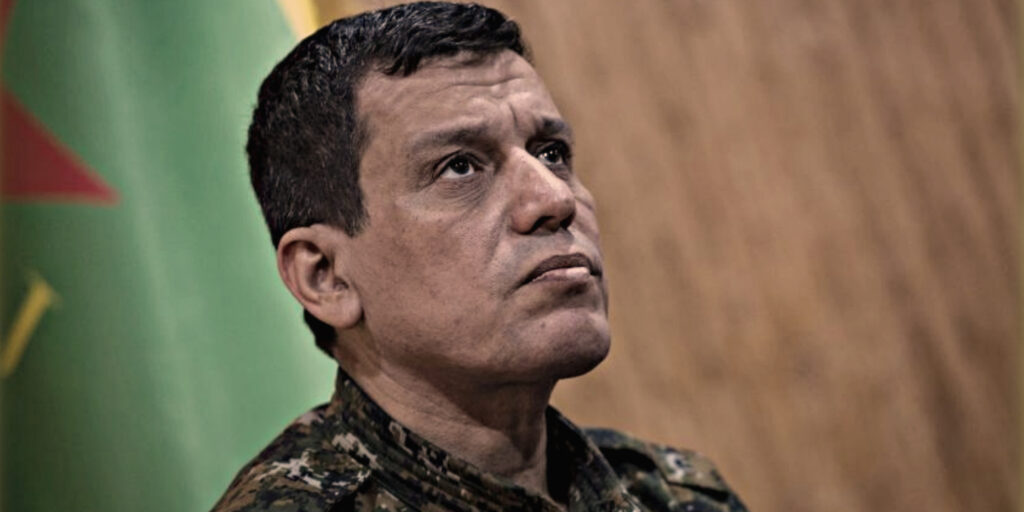
To understand the situation in NES, we need to understand the situation in Gaza, how they are linked – both in terms of their shared struggle and in terms of America’s motivations within the Middle East. Syrian Democratic Forces Commander Mazloum Abdi recently addressed the issues of the connection between the Palestinian and Kurdish struggles when asked about the violence in Gaza and increased attacks in Syria by al-Monitor’s Amberin Zaman.
“Neither the Palestinians nor the Kurds are going to disappear or give up their struggle for justice no matter what. The Palestinian and Kurdish issues need to be resolved through dialogue, not aggression, and that obviously applies to all sides. The tragedy unfolding in Gaza contains several key lessons. The first is that the Palestinian and Kurdish issues remain the biggest sources of instability and conflict in the Middle East.”
Robin Fleming is an American researcher who worked with the Rojava Information Centre, and focuses on North and East Syria.


