

Sütun 1
Sütun 2
Sütun 3
Medya News
Daily News
Breaking News
Subscribe
No Result
View All Result
  • Home
  • All News
  • Opinion
  • Kurdistan
  • Women
  • Politics
  • Human Rights
  • INTERVIEW
  • More
    • SPECIAL REPORTS
    • ECOLOGY
    • WORLD
    • AUDIO ARTICLES
    • JOURNALISM
    • ECONOMY
    • CULTURE & ART
    • LONG READS
    • NEWSLETTER
    • DAILY NEWS
MULTIMEDIA
PODCAST
LIVE BLOG
  • Home
  • All News
  • Opinion
  • Kurdistan
  • Women
  • Politics
  • Human Rights
  • INTERVIEW
  • More
    • SPECIAL REPORTS
    • ECOLOGY
    • WORLD
    • AUDIO ARTICLES
    • JOURNALISM
    • ECONOMY
    • CULTURE & ART
    • LONG READS
    • NEWSLETTER
    • DAILY NEWS
MULTIMEDIA
PODCAST
No Result
View All Result
Medya News

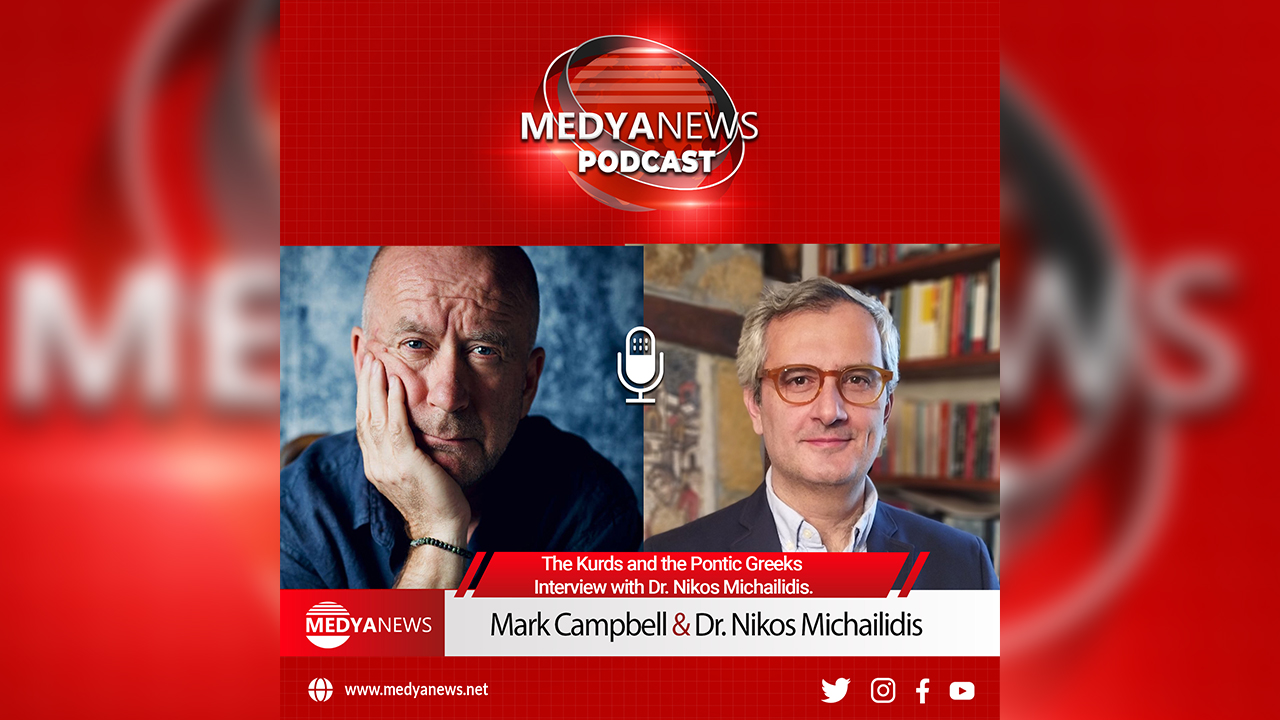
The Kurds and the Pontic Greeks – a replay of history

8:45 am 13/08/2022
A A
The Kurds and the Pontic Greeks – a replay of history
Share post

https://medyanews.net/wp-content/uploads/2022/08/12082022-N111-Mark-Campbell-Dr.Nikolas-Mic-AudioVersion-3235.mp3

by Mark Campbell

Since the establishment of the modern state of Turkey in 1923 out of the ashes of the Ottoman Empire, the newly formed Turkish state abandoned any idea of granting the sizeable population of Kurdish people, mostly living within the south east borders of the state, autonomy or any rights of self-determination as had been stipulated and provided for in the terms of the Treaty of Sèvres, signed just 3 years before in 1920.

Then, following on from the genocidal campaigns against the Armenians, Greeks, Assyrians and other Christian minorities living in Turkey, and after the signing of the Treaty of Lausanne in 1923 establishing the present-day borders of Turkey, Kurds were denied not just their rights of self-determination but the newly formed ‘Kemalist’ government now announced that any non-Turkish citizen of Turkey will be forcibly ‘Turkified’.

Ismet Inönü, one of the founders of the Turkish state, speaking to the Turkish Congress of the Turk Ocakları in 1925 said: “We are frankly nationalist and nationalism is our only factor of cohesion. Before the Turkish majority other elements have no kind of influence. At any price, we must ‘turkify’ the inhabitants of our land, and we will annihilate those who oppose Turks or ‘le turquisme’.”

With this chilling statement of intent, the Turkish state now began a forced assimilation policy against the Kurdish people, who it is estimated make up anywhere between a quarter to a third of the population of Turkey. What followed were massacres on genocidal scales as the Turkish state labelled any Kurd who refused to abide by this new ‘policy’ and forcibly assimilate to be ‘a Turk’, giving up their ancient language, culture and history, as ‘terrorists’ and Kurdish leaders were hung and exiled while thousands of Kurdish villages were burnt and millions of Kurds forced into exile.

This has essentially been the Turkish state’s policy ever since and today Turkey is still destroying towns, bombing villages, criminalising and jailing elected Kurdish politicians and mayors, while still attempting to ‘forcibly assimilate’ the Kurds against their will to ‘be Turks’, and continuing to label any Kurds who do not submit to their will as ‘terrorists’.

These genocidal campaigns were of course also perpetrated against Christian communities who had lived in Turkey and the Pontic Greeks who lived along the coast of the Black Sea for thousands of years. The Greek Pontic community were subjected to genocidal treatment by the emerging Young Turks in the dissolving Ottoman Empire. A total of more than 3.5 million Greeks, Armenians, and Assyrians were killed from roughly 1914 to 1923. Of this, as many as 1.5 million Greeks may have died due to massacre or from exposure to the elements. About one million had also migrated, mostly under coercion.

I’m therefore very pleased and honoured to be joined today by Dr Nikos Michailidis, who is an expert and specialist in the region.

Dr Michailidis, originally from Thessaloniki, Greece, has studied Political Science and International Relations at both Panteion University, Greece (B.A) and Boğaziçi University, Turkey (M.A), alongside studying Anthropology at York University, Canada (M.A). He received his PhD in anthropology from Princeton University and did fieldwork research in Trabzon, Istanbul and Ankara.

Dr Michailidis is a sociocultural anthropologist.

His research interests include political anthropology, Hellenic cultural heritage in the eastern Mediterranean, arts and politics, social transformation, collective memory, material culture and exchange, and humans and technology in Greece, USA, and Turkey. He is currently working on his first book which analyses the remaking and revival of listening to Pontian-Greek lyra (Liera) music in contemporary Turkey and its socio-political repercussions.

In our first question, Dr Michailidis looked at Turkey’s expansionist actions and answered the question whether they were simply an election ploy of a dictatorial president losing support ahead of next year’s elections and trying to garner Turkish nationalist votes, or whether these expansionist strategies being followed by Turkey are long-term planned policies and strategies of the actual Turkish ‘deep’ state themselves.

In the second question, Dr Michailidis explored the similarities between the genocidal campaigns against the Pontic Greeks of the Black Sea region and the Kurds in Rojava, looking at the stated plans for demographic population changes as detailed by the Turkish Social Services Minister recently in Adana and also the experience of the people of Afrin and ongoing attacks against the people of North and East Syria.

Finally, the Greek sociocultural anthropologist and expert in the eastern Mediterranean answered the following question: If Turkey have not succeeded in trying to solve the Kurdish question by military means and suppression in one hundred years of the Turkish Republic (in fact the Kurds are arguably stronger now, politically and in terms of awareness of their identity than in any point in history), do you think that Turkey really believe that they can solve the Kurdish question by military means alone or will there have to be a point of realisation that a political solution is needed and how might that come about in your opinion?

Please listen to the whole podcast for Dr Nikos Michailidis’s interesting and insightful replies.


Share post
Tags: Trending

Related Posts

Daily News : 06 November 2024

Daily News : 06 November 2024

November 6, 2024
Daily News : 05 November 2024

Daily News : 05 November 2024

November 5, 2024
Daily News : 03 SEPTEMBER 2024

Daily News : 03 SEPTEMBER 2024

September 3, 2024
Fifty more detainees released under amnesty for internal peace in North and East Syria

Fifty more detainees released under amnesty for internal peace in North and East Syria

September 3, 2024
Uncle of missing child in Turkey arrested as case exposes broader child safety issues

Uncle of missing child in Turkey arrested as case exposes broader child safety issues

September 3, 2024
Turkey’s bid to join BRICS raises questions within NATO

Turkey’s bid to join BRICS raises questions within NATO

September 3, 2024

The news content on our website cannot be quoted without permission, even by citing the source. It cannot be copied or published elsewhere, contrary to the law or without permission.

Follow Medya News

Categories

  • All News
  • Politics
  • Human Rights
  • Opinion
  • Kurdistan
  • Human Rights
  • Interview
  • Women
  • Audio Articles
  • Special Report

Quick Menu

  • Daily News
  • Live Blog
  • Podcast
  • Videos
  • Breaking News

About

Impressum

About us

Privacy Policy

Welcome Back!

Login to your account below

Forgotten Password?

Retrieve your password

Please enter your username or email address to reset your password.

Log In
We use cookies on our website to give you the most relevant experience by remembering your preferences and repeat visits. By clicking “Accept All”, you consent to the use of ALL the cookies. However, you may visit "Cookie Settings" to provide a controlled consent.
Cookie SettingsAccept All
Manage consent

Privacy Overview

This website uses cookies to improve your experience while you navigate through the website. Out of these, the cookies that are categorized as necessary are stored on your browser as they are essential for the working of basic functionalities of the website. We also use third-party cookies that help us analyze and understand how you use this website. These cookies will be stored in your browser only with your consent. You also have the option to opt-out of these cookies. But opting out of some of these cookies may affect your browsing experience.
Necessary
Always Enabled
Necessary cookies are absolutely essential for the website to function properly. These cookies ensure basic functionalities and security features of the website, anonymously.
CookieDurationDescription
cookielawinfo-checkbox-analytics11 monthsThis cookie is set by GDPR Cookie Consent plugin. The cookie is used to store the user consent for the cookies in the category "Analytics".
cookielawinfo-checkbox-functional11 monthsThe cookie is set by GDPR cookie consent to record the user consent for the cookies in the category "Functional".
cookielawinfo-checkbox-necessary11 monthsThis cookie is set by GDPR Cookie Consent plugin. The cookies is used to store the user consent for the cookies in the category "Necessary".
cookielawinfo-checkbox-others11 monthsThis cookie is set by GDPR Cookie Consent plugin. The cookie is used to store the user consent for the cookies in the category "Other.
cookielawinfo-checkbox-performance11 monthsThis cookie is set by GDPR Cookie Consent plugin. The cookie is used to store the user consent for the cookies in the category "Performance".
viewed_cookie_policy11 monthsThe cookie is set by the GDPR Cookie Consent plugin and is used to store whether or not user has consented to the use of cookies. It does not store any personal data.
Functional
Functional cookies help to perform certain functionalities like sharing the content of the website on social media platforms, collect feedbacks, and other third-party features.
Performance
Performance cookies are used to understand and analyze the key performance indexes of the website which helps in delivering a better user experience for the visitors.
Analytics
Analytical cookies are used to understand how visitors interact with the website. These cookies help provide information on metrics the number of visitors, bounce rate, traffic source, etc.
Advertisement
Advertisement cookies are used to provide visitors with relevant ads and marketing campaigns. These cookies track visitors across websites and collect information to provide customized ads.
Others
Other uncategorized cookies are those that are being analyzed and have not been classified into a category as yet.
SAVE & ACCEPT

Add New Playlist

Contact

[contact-form-7 id=”18690″ title=”Contact form 1″]

[email-subscribers-form id=”1″]

No Result
View All Result
  • All News
  • Kurdistan
  • Women
  • Politics
  • Human Rights
  • Interview
  • Long Reads
  • World
  • Journalism
  • Ecology
  • Economy
  • Culture & Art
  • Daily News
  • Breaking News
  • Newsletter
  • Opinion
  • Authors
  • Podcast
  • LIVE BLOG

© 2020 Medyanews. All Rights Reserved